Syrian women still being held back in politics amid prevailing social norms and 'token measures'
Source: New Arab
On Sunday, 5 October, Syria held its first parliamentary elections since the fall of the Assad regime last year.
Despite concerns over inclusivity and repeated delays, the elections were seen by many as a step forward after decades of dictatorship — particularly for women — with Syria's interim president, Ahmed al-Sharaa, calling the parliamentary election "historic."
But despite women playing key roles in education, healthcare, relief work, and civil society — especially during the war when they took on significantly greater economic and social responsibilities — Syrian women’s political presence remains limited. This is mainly because politics is still viewed as a male domain.
Ahead of the vote, for example, a government decree allocating only 20 per cent of parliamentary seats to female representatives triggered widespread debate across both political and social circles.
While some described the move as a “token measure” that failed to reflect the scale of sacrifices made by Syrian women during the war — and those still being made as the country continues to face multiple crises — others viewed it as a necessary, temporary step towards addressing decades of marginalisation and exclusion.
Full article here.
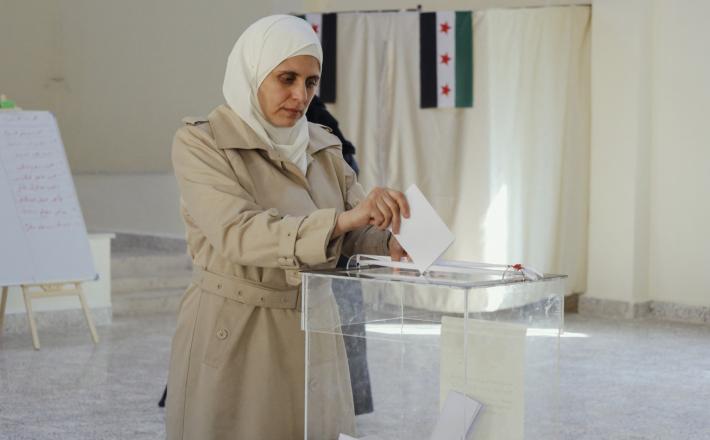
On Sunday, 5 October, Syria held its first parliamentary elections since the fall of the Assad regime last year.
Despite concerns over inclusivity and repeated delays, the elections were seen by many as a step forward after decades of dictatorship — particularly for women — with Syria's interim president, Ahmed al-Sharaa, calling the parliamentary election "historic."
But despite women playing key roles in education, healthcare, relief work, and civil society — especially during the war when they took on significantly greater economic and social responsibilities — Syrian women’s political presence remains limited. This is mainly because politics is still viewed as a male domain.
Ahead of the vote, for example, a government decree allocating only 20 per cent of parliamentary seats to female representatives triggered widespread debate across both political and social circles.
While some described the move as a “token measure” that failed to reflect the scale of sacrifices made by Syrian women during the war — and those still being made as the country continues to face multiple crises — others viewed it as a necessary, temporary step towards addressing decades of marginalisation and exclusion.
Full article here.